- Classes: Wed 6-8pm & Sun 12-2pm
- Call Us: +44 7727 874307
- Email:info@bkmcommunity.com
The first word revealed of the Quran was a command to read. Not to pray, not to fast, not to give. Read.
Muslims cite this often, and the repetition has worn the strangeness off it. But it is genuinely unusual. A religion whose opening instruction concerns learning has placed intellectual effort at its foundation rather than treating it as a later refinement for those inclined toward books.
Knowledge as Worship
The Quran draws a direct line between knowledge and reverence, stating that among God’s servants, it is those who have knowledge who fear Him (35:28). The connection is not decorative. Understanding something properly, whether the intricacy of the natural world or the weight of one’s own obligations, produces a response that ignorance cannot.
It also asks, pointedly, whether those who know and those who do not know are equal (39:9), leaving the answer to the reader.
The practical consequence is that seeking knowledge is treated as an act of worship rather than as preparation for one. Sitting with a difficult text is not time taken away from devotion. Within this framework, it is devotion.
Two Kinds of Knowledge, Both Valued
A distinction is commonly drawn between knowledge that is individually obligatory and knowledge that is collectively obligatory.
The first covers what every Muslim personally needs: how to pray correctly, what makes a fast valid, the basic obligations of earning and spending honestly. Nobody is excused from this, and it is not a large body of material. Most of it can be learned in a few months of modest effort.
The second covers what a community requires but not every individual must possess: medicine, engineering, jurisprudence, teaching, and the trades that keep a society functioning. If enough people acquire it, the obligation is met on everyone’s behalf. If nobody does, the community as a whole is answerable.
This second category is worth dwelling on, because it dissolves a distinction many Muslims assume exists. The student studying engineering with the intention of serving people is engaged in something the tradition classifies as a communal religious duty. Useful knowledge is not restricted to religious subjects.
Reason and Revelation Are Not Rivals
A great deal of modern discussion assumes faith and reason pull against each other, so that increasing one requires reducing the other.
The Islamic intellectual tradition did not generally proceed on that assumption. The Quran argues. It presents evidence, poses questions, invites its audience to consider the alternation of night and day and the structure of the natural world, and criticises those who follow inherited custom without examining it.
This produced a scholarly culture in which theology, logic, mathematics, astronomy, and medicine were studied by the same people, often in the same institutions. The figures remembered from that period, working in optics, algebra, and clinical medicine, were not operating in tension with their faith. Many described their investigation of the created world as an extension of it.
That does not mean revelation and reason never appear to conflict, or that Muslims have agreed on how to resolve such moments. They have debated it extensively. But the assumption that faith requires the suspension of thought is not one the tradition supplies.
Knowledge That Does Not Change You
Alongside the encouragement sits a persistent warning. Knowledge that produces no change in conduct is treated in the tradition not as neutral but as a liability, and scholars have long cautioned against learning acquired for status, argument, or the pleasure of being correct.
The Quran is severe about those who instruct others while neglecting themselves, asking whether they will order righteousness and forget themselves while reciting the Scripture (2:44).
This is a useful check in an era of unlimited access. It is now possible to consume lectures continuously, follow scholarly disputes closely, develop firm opinions on contested questions, and remain exactly as impatient, ungenerous, and careless as before. Volume of information is not the measure. Whether it altered anything is.
Practical Steps
For anyone wanting to take this seriously, a few principles matter more than enthusiasm.
- Secure the basics first. Knowing the conditions of a valid prayer matters more than having a view on a contested legal question.
- Study with a teacher. Learning entirely from books and videos produces confident errors, because nothing corrects a misunderstanding you do not know you have.
- Check who you are learning from. Anyone can publish. Reliability is not conveyed by presentation quality or follower count.
- Go slowly and stay consistent. Twenty minutes daily over a year outperforms occasional intensive bursts.
- Accept not knowing. The scholars of the tradition said I do not know frequently. It is a mark of seriousness, not weakness.
It Is Never Too Late
Many adults quietly believe the opportunity has passed, that learning is for children in weekend classes and that arriving at forty without solid grounding is embarrassing.
It is not, and the tradition contains numerous accounts of people beginning late and going far. The alternative to starting now is not preserving dignity. It is remaining where you are indefinitely.
Learn With Us in Manchester
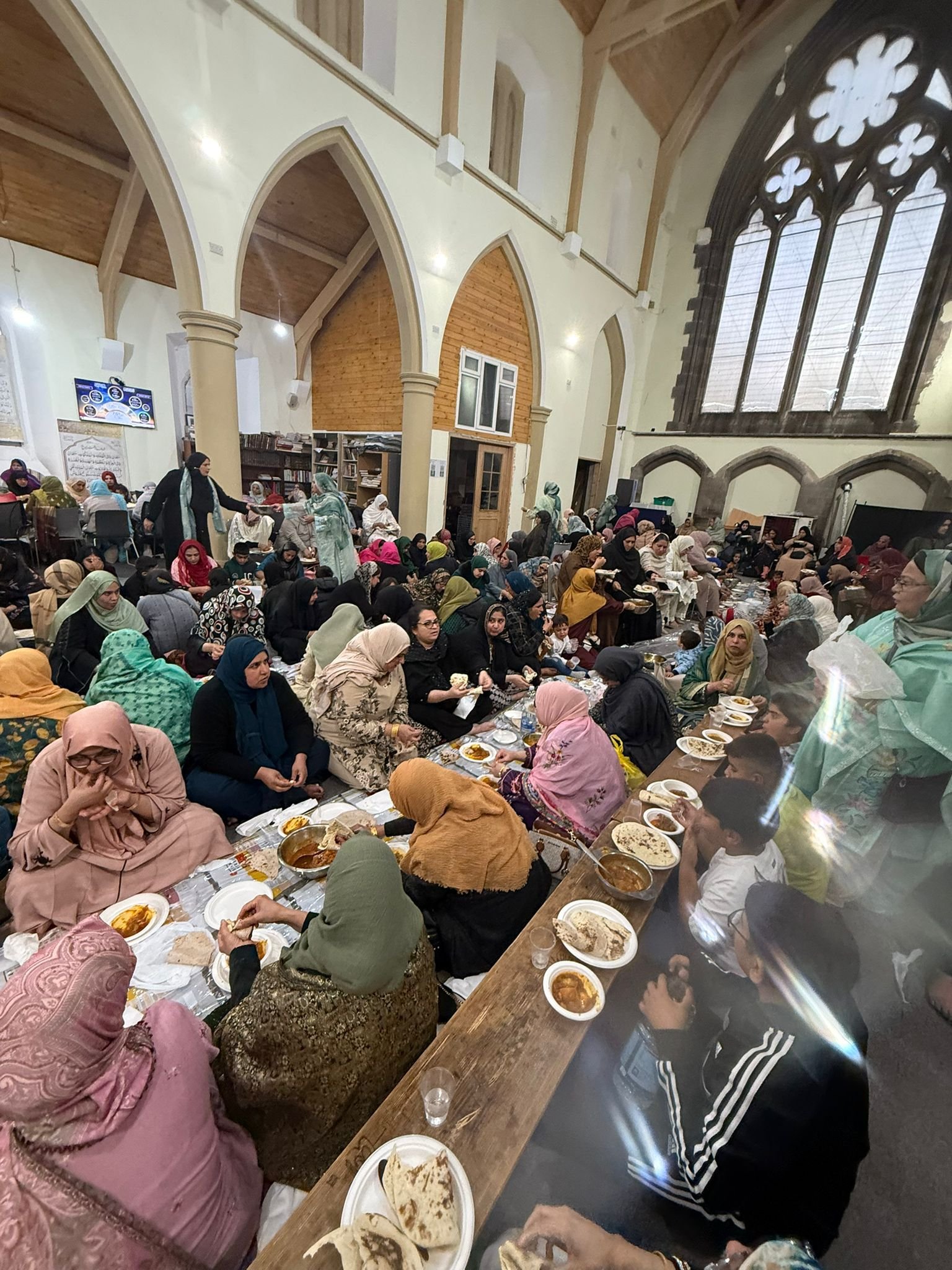
BKM Community Group runs free Arabic and Urdu classes for ages 14 and over, Quran classes for all ages, and university and college admissions guidance for students. Whether you want to build foundations or study more deeply, call 07727 874307 or get in touch.
© 2026 BKM Community Group (Bazm e Khizr e Milat), Manchester. All rights reserved. Privacy Policy
Leave Your Comments