- Classes: Wed 6-8pm & Sun 12-2pm
- Call Us: +44 7727 874307
- Email:info@bkmcommunity.com
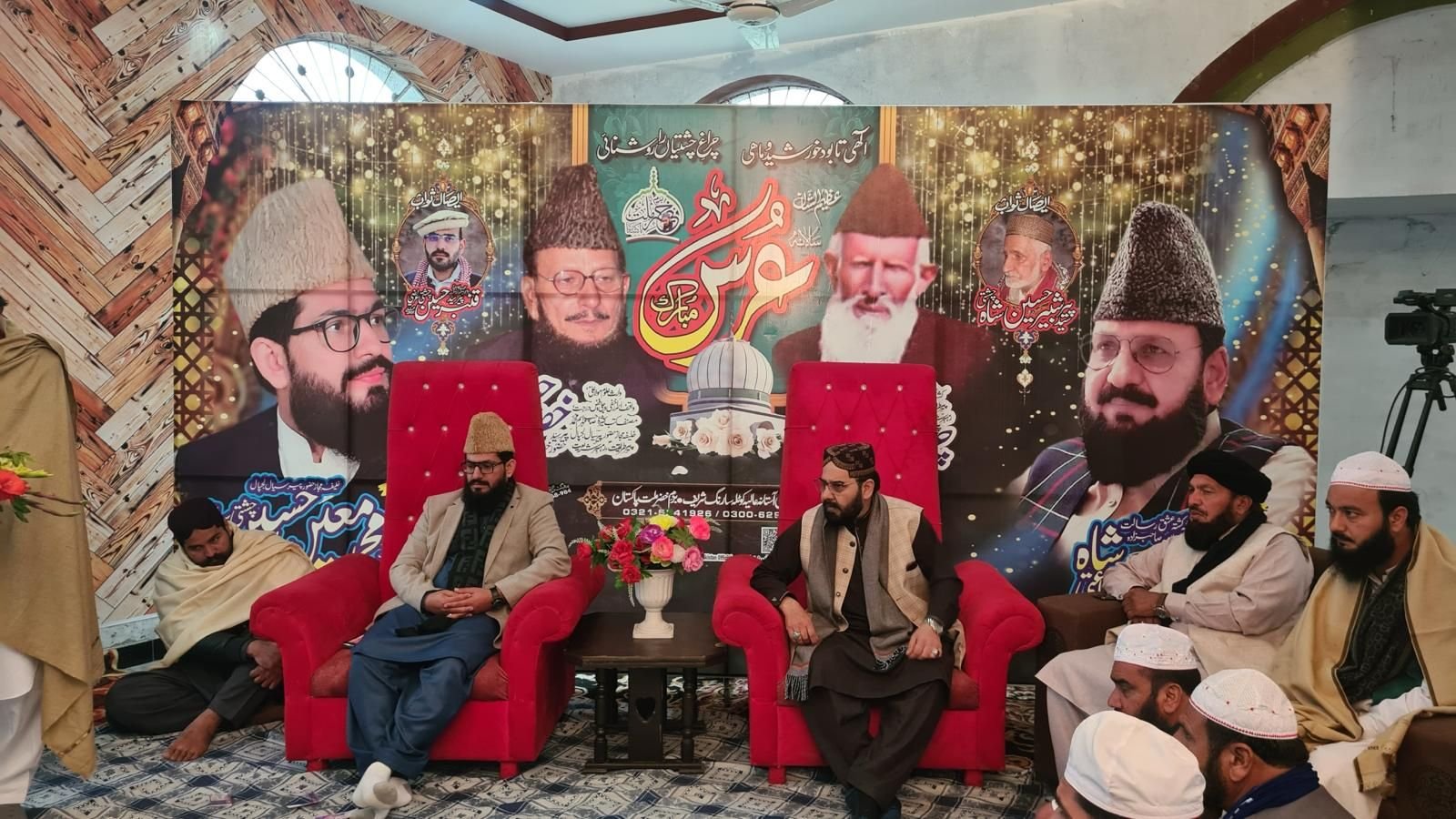
Walk past a community hall in Longsight on a Thursday evening in Rabi al-Awwal and you may hear it before you see anything: a single voice, unaccompanied, carrying a line of Urdu poetry, and then a room of two hundred people answering it. For a great many Muslims in Manchester, this is what the month sounds like.
Naat and milad gatherings are among the most visible traditions in our community, and also among the least explained. Children grow up attending them without ever being told what the poetry is, where it comes from, or what the etiquette around it is meant to protect. This article is an attempt to fill that gap.
What a Naat Actually Is
A naat is a poem in praise of the Prophet Muhammad, peace and blessings be upon him. That is the whole definition. It is not a category of music, it is not a genre of religious song, and it is not the same thing as a hamd, which is a poem praising Allah alone. The distinction matters, because the two are often performed in the same sitting and are frequently confused.
The practice is as old as the community itself. Hassan ibn Thabit, may Allah be pleased with him, composed verse in the Prophet’s defence during his lifetime and was given a place in the Prophet’s own mosque from which to recite it. What we do in a hall in Manchester in 1448 AH is a continuation of something that began in Madinah.
Across the centuries the tradition has been carried in several languages at once. In Arabic there is the Qasida al-Burda of Imam al-Busiri, a thirteenth-century poem still recited from Morocco to Indonesia. In Persian and then in Urdu the form flowered enormously, and it is largely the Urdu and Punjabi repertoire that South Asian families in Britain inherited. More recently, English naat has begun to appear, written by and for people who grew up here.
What Happens at a Milad Gathering
Milad (also written mawlid) simply means birth, and by extension a gathering held to commemorate the birth of the Prophet, peace be upon him. The shape of such a gathering is fairly consistent:
- Tilawat — the gathering opens with recitation of the Quran.
- Hamd — a poem in praise of Allah, before any praise of creation.
- Naat — one or several reciters, usually unaccompanied or with light percussion depending on local custom.
- Bayan — a talk, most often drawn from the seerah, the biography of the Prophet.
- Salat and salam — the sending of blessings, in many communities recited standing.
- Dua — supplication for the gathering, the sick, the deceased and the wider ummah.
- Langar — food, shared without charge. In practice this is not an afterthought; feeding people is treated as part of the gathering, not a courtesy attached to it.
An urs follows a similar pattern but commemorates the passing of a scholar or saint rather than the Prophet’s birth, and is typically held annually on the anniversary of that death.
Why Rabi al-Awwal
Rabi al-Awwal is the third month of the Hijri calendar, and it is the month in which the Prophet, peace be upon him, was born. It is also the month in which he passed away. That double weight is part of why the observance has never been purely festive: gatherings in this month tend to move between joy and grief within the same hour, and the poetry reflects it.
Because the Islamic calendar is lunar, Rabi al-Awwal moves backwards through the Gregorian year by roughly eleven days annually. It is worth checking dates each year rather than assuming; a gathering that fell in November when you were a child will fall in August now.
The Etiquette That Makes It Meaningful
Three things are worth naming plainly, because they are where these gatherings most often go wrong.
Praise has limits, and the Prophet set them himself
He said, peace be upon him: Do not over-praise me as the Christians over-praised the son of Maryam. I am only a servant, so say: the servant of Allah and His Messenger. Recorded by al-Bukhari (Sahih al-Bukhari 3445). Poetry that drifts into language properly belonging to Allah alone is not stronger devotion; it is a failure of adab. A good reciter knows the line and stays behind it.
It is a gathering, not a performance
When naat becomes competitive — who can hold a note longest, whose recording circulates furthest — the point has been lost. The measure of a gathering is not the volume of the response but whether people leave it more attached to the Sunnah than when they arrived.
Understanding beats volume
A great many attendees, especially those born in Britain, do not follow the Urdu or Persian being recited. Providing a translation, or having the reciter explain a couplet before performing it, transforms the experience. Our own Islamic teachings sessions and Arabic and Urdu classes exist partly for this reason.
Where Muslims Differ
It would be dishonest to write this without acknowledging that Muslims do not agree on milad. Some scholarly traditions hold that commemorating the Prophet’s birth with organised annual gatherings is a praiseworthy innovation with clear precedent; others hold that it lacks the necessary basis and should not be treated as an established practice. Both positions are argued by serious people with serious evidence.
What is not disputed by anyone is the underlying obligation: love of the Prophet, peace be upon him, and the sending of blessings upon him. The disagreement concerns the form, not the substance. Within this community we follow the tradition described above, and we would encourage anyone with questions about it to raise them with a scholar directly rather than settle the matter from a video.
Naat and Milad in Manchester
BKM Community holds naat and milad gatherings through the year, alongside our regular study circles. They are open to families, and there is no charge to attend. If you have never been to one and are unsure what to expect, come to the food afterwards and speak to someone; it is a low-pressure way in.
Photographs from previous gatherings are in our photo gallery. Dates for the next one appear on our events page, and you are welcome to send us a message to be told when it is arranged.
Further listening
Shaykh-ul-Islam Dr Muhammad Tahir-ul-Qadri has spoken at length on this subject. His lectures are available on Minhaj.TV:
These are external resources offered for further study. BKM Community Group is not formally affiliated with Minhaj-ul-Quran International, and these links do not represent an endorsement of this article.
From our own library
Peer Syed Khizar Hussain Chishti (Khizr-e-Millat), after whom BKM Community Group — Bazm-e-Khizr-e-Millat — is named, wrote on this subject.
- Husn-e-Rasool ﷺ (حُسنِ رسول) — on the beauty and description of the Prophet ﷺ, 32 pages Read the PDF
These works are in Urdu and are hosted on this website. They are offered as further reading from our own tradition; this article is not a translation or summary of them.
Further reading in our tradition
This article follows the Hanafi school as it is taught in the Ahl-e-Sunnat tradition. The standard reference works are:
- Bahar-e-Shariat — Mufti Amjad Ali Azmi. The complete Hanafi fiqh manual in Urdu, and the first place to look for a ruling on worship.
- Fatawa Ridawiyya — Imam Ahmad Raza Khan (Ala Hazrat). Rulings on specific questions. Read on Archive.org
- Tafsir Noor-ul-Irfan — Mufti Ahmad Yar Khan Naeemi. Commentary on the Quran alongside Kanz-ul-Iman. English edition on Archive.org
These are named as the authoritative works of the tradition this article follows. Page references have not been checked against them here. Where anything in this article differs from these works, they are correct and this article is not.
About this article
This article describes a practice as it is observed in our community, and explains where scholars have differed. It is general guidance, not a fatwa.
Published by BKM Community, Manchester. If you believe something here is inaccurate, please tell us and we will correct it.
© 2026 BKM Community Group (Bazm e Khizr e Milat), Manchester. All rights reserved. Privacy Policy
Leave Your Comments