
- Classes: Wed 6-8pm & Sun 12-2pm
- Call Us: +44 7727 874307
- Email:info@bkmcommunity.com
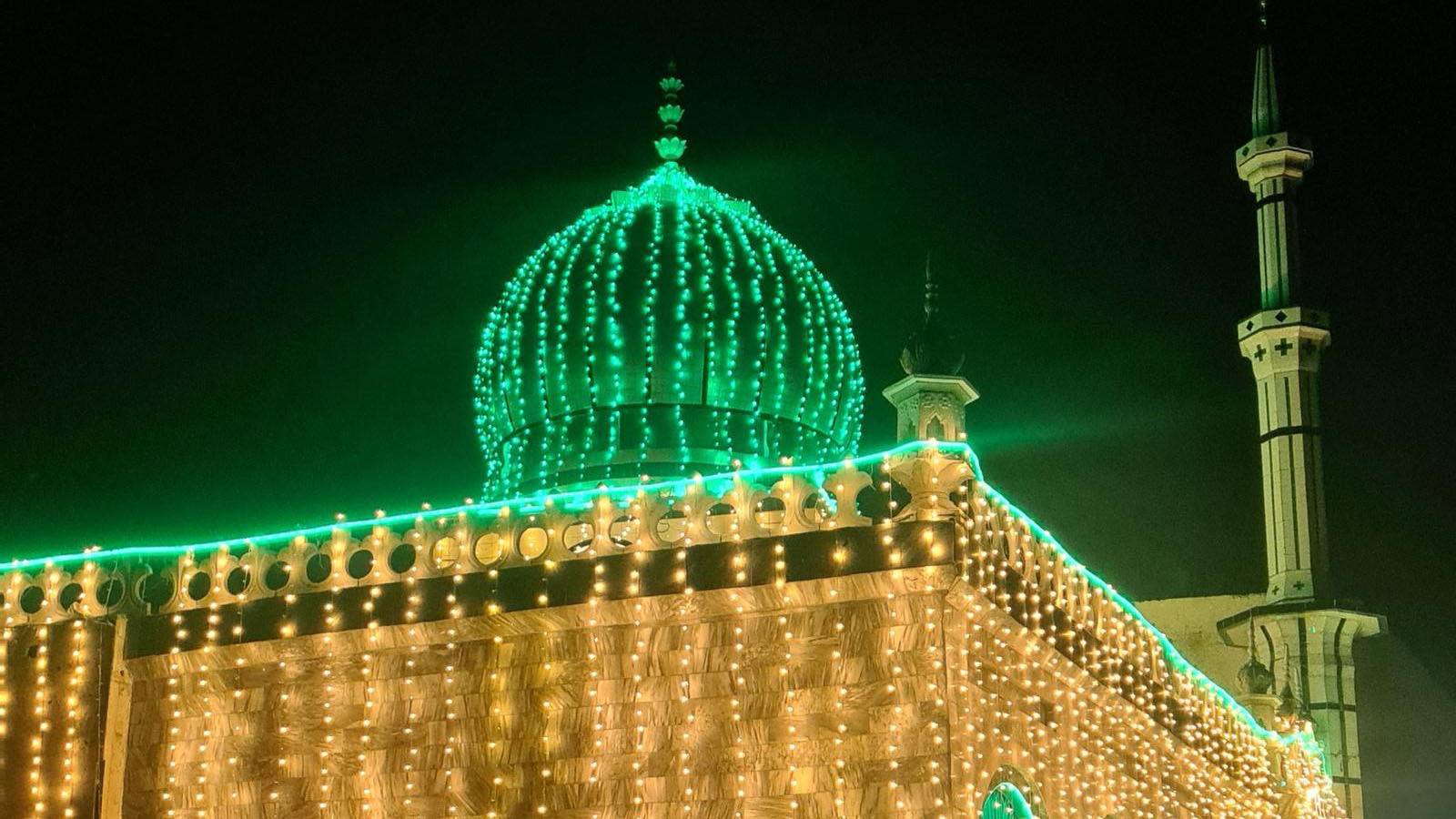
Ask most British Muslims which Hijri month it is and you will get a confident answer twice a year — in Ramadan, and around Eid al-Adha. The other ten months tend to pass unremarked. That is a shame, because the Islamic calendar is not merely a way of dating religious festivals. It is a different way of organising time, and understanding it changes how the year feels.
Where the Calendar Starts
The Hijri calendar does not begin with the birth of the Prophet, peace be upon him, nor with the first revelation. It begins with the Hijrah — the migration from Makkah to Madinah in 622 CE.
That choice is deliberate and worth pausing on. The starting point of Muslim history is not a miracle or a birth but the moment a community stopped being a persecuted minority and became responsible for governing itself. The calendar was formalised roughly seventeen years later during the caliphate of Umar ibn al-Khattab, may Allah be pleased with him, and the Hijrah was selected as year one after consultation.
The year is written with the suffix AH, for anno Hegirae. At the time of writing we are in 1448 AH.
The Twelve Months
The month names are older than Islam and mostly describe the seasons of pre-Islamic Arabia — which is why several of them no longer match the weather at all, the lunar year having drifted away from the solar one long ago.
| # | Month | What the name means | What falls in it |
|---|---|---|---|
| 1 | Muharram ★ | Forbidden | Starts the year. Ashura on the tenth, widely observed with voluntary fasting. |
| 2 | Safar | Empty | From the houses left empty when tribes travelled. Pre-Islamic Arabs thought it unlucky; the Prophet, peace be upon him, rejected that. |
| 3 | Rabi al-Awwal | The first spring | The month of the Prophet’s birth, and of his passing. |
| 4 | Rabi al-Thani | The second spring | — |
| 5 | Jumada al-Ula | The first of dry land | From a root meaning frozen or parched. |
| 6 | Jumada al-Akhirah | The last of dry land | — |
| 7 | Rajab ★ | To revere | A traditional time for increased voluntary worship. |
| 8 | Sha’ban | Scattering | From tribes dispersing to find water. The Prophet fasted more in this month than any other outside Ramadan. |
| 9 | Ramadan | Intense heat | Obligatory fasting, and the revelation of the Quran. |
| 10 | Shawwal | Raising | Opens with Eid al-Fitr. Six voluntary fasts in this month are a well-known Sunnah. |
| 11 | Dhu al-Qa’dah ★ | The one of sitting | When fighting stopped and people stayed put. |
| 12 | Dhu al-Hijjah ★ | The one of pilgrimage | Hajj, the Day of Arafah and Eid al-Adha. |
★ marks the four sacred months.
The Four Sacred Months
The Quran states that of the twelve months, four are sacred (9:36). Three run consecutively — Dhu al-Qa’dah, Dhu al-Hijjah and Muharram — and Rajab stands alone.
Their original function was practical: they created predictable windows of truce in which pilgrimage and trade could happen safely. The Quran retains the sanctity and attaches a moral instruction to it, warning against wronging oneself in them. Traditionally this has been read as meaning that both good and bad actions carry additional weight in these months, which is why so much voluntary fasting clusters in Muharram and Rajab.
The Day Begins at Sunset
This is the detail most people miss, and it causes real confusion. In the Islamic calendar the new day begins at maghrib, not at midnight.
So the night of the fifteenth of Sha’ban precedes the day of the fifteenth. When someone says a gathering is on “the night of” a particular date, they mean the evening that begins that date, not the evening at the end of it. If you have ever turned up to something a day late, this is almost certainly why.
Why the Dates Move — and Why Mosques Sometimes Differ
A lunar month is roughly 29.5 days, so twelve of them come to about 354 days — eleven days short of the solar year. This is why Ramadan travels backwards through the seasons, taking around thirty-three years to return to the same point. Anyone who fasted through a British December as a child will fast through a British June before they are done.
Because a month can be 29 or 30 days, the start of the next one depends on whether the new crescent is seen. Three approaches are common in Britain:
- Local sighting — the month begins on the testimony of sightings in the UK.
- Following Makkah — the month begins with the Saudi announcement.
- Calculation — astronomical data is used to fix the date in advance.
Each has scholarly backing, and this is why two mosques a mile apart in Manchester can celebrate Eid on different days. It is a genuine difference of interpretation, not carelessness. The practical advice is straightforward: find out which method your local mosque follows, and follow your community rather than trying to arbitrate between them.
Living With Two Calendars in Britain
A few things make this easier in practice:
- Put the approximate Hijri dates in your work calendar a year ahead. Eid leave is far easier to book in September than in the week itself, and most employers respond well to notice.
- Tell your children’s school in writing at the start of the academic year which days they are likely to be absent.
- Expect a day of uncertainty either side of Eid, and say so when you book.
- Set a reminder for the start of Sha’ban. It is the natural moment to begin preparing for Ramadan rather than arriving at it unready.
Once you start noticing the Hijri date, the year acquires a rhythm it did not have before — sacred months, months of preparation, months of intensity, months of rest. That rhythm is the point.
BKM Community runs study circles and classes through the year in Manchester. You can see what is on at our events page, browse our classes, or contact us with a question.
Further reading in our tradition
This article follows the Hanafi school as it is taught in the Ahl-e-Sunnat tradition. The standard reference works are:
- Bahar-e-Shariat — Mufti Amjad Ali Azmi. The complete Hanafi fiqh manual in Urdu, and the first place to look for a ruling on worship.
- Fatawa Ridawiyya — Imam Ahmad Raza Khan (Ala Hazrat). Rulings on specific questions. Read on Archive.org
- Tafsir Noor-ul-Irfan — Mufti Ahmad Yar Khan Naeemi. Commentary on the Quran alongside Kanz-ul-Iman. English edition on Archive.org
These are named as the authoritative works of the tradition this article follows. Page references have not been checked against them here. Where anything in this article differs from these works, they are correct and this article is not.
About this article
This article is general guidance on the Hijri calendar. Dates depend on local moon sighting, so always confirm the start of a month with your local mosque.
Published by BKM Community, Manchester. If you believe something here is inaccurate, please tell us and we will correct it.
© 2026 BKM Community Group (Bazm e Khizr e Milat), Manchester. All rights reserved. Privacy Policy
Leave Your Comments