
- Classes: Wed 6-8pm & Sun 12-2pm
- Call Us: +44 7727 874307
- Email:info@bkmcommunity.com
Tucked into the last pages of a short Urdu treatise on ghusl — after the fiqh, after the method, after the list of spots people leave dry — there is a passage that changes the subject entirely.
Peer Syed Khizar Hussain Chishti has spent twenty pages on washing the body. Then he quotes Shaykh Isma’il Haqqi, author of Tafsir Ruh al-Bayan, on the authority of Shaykh Nishapuri, and lists eight kinds of purity — of which the body is only the sixth.
It is a striking piece of teaching and, as far as we can find, it has not appeared in English before. So here it is.
The Eight
1. Purity of the heart
That it turn its face away from all besides Allah.
Everything else on the list depends on this one. A heart pointed at something else will keep the other seven going as performance.
2. Purity of the inward — taharat as-sirr
Al-mushahadah — witnessing.
The innermost part of a person, kept clear enough that awareness of Allah is not crowded out. This is the same idea the hadith of Jibril puts as ihsan: to worship Him as though you see Him.
3. Purity of the breast — taharat as-sadr
Ar-raja’ wal-qana’ah — putting an end to long-drawn hope, and adopting contentment.
Not the abandonment of hope in Allah, which is forbidden. The endless if only — the next job, the bigger house, the year when things will finally settle. A chest full of that has no room for anything else.
4. Purity of the soul — taharat ar-ruh
Al-haya’ wal-haybah — modesty, and awe.
Two things the modern world has almost no vocabulary for. Haya is the restraint that stops you before anyone is watching. Haybah is the sense of standing before something vastly greater than yourself.
5. Purity of the stomach — taharat al-batn
Eating what is lawful, and abstaining from the unlawful and the doubtful.
Note that doubtful is included. This is not only about pork and alcohol. It reaches into how the money that bought the food was earned.
6. Purity of the body — taharat al-badan
Abandoning carnal desires, and removing dirt.
Here, at number six, is the ghusl the rest of the treatise is about. Necessary — and placed below the heart, the inward, the breast, the soul and the stomach.
7. Purity of the hands — taharat al-yadayn
Al-wara’ wal-ijtihad — scrupulousness, and striving for lawful earning.
The hands are named for what they do. A washed hand that takes what is not its own has not been purified in the sense meant here.
8. Purity of the tongue — taharat al-lisan
Adh-dhikr wal-istighfar — remembrance, and seeking forgiveness.
The tongue is not purified by silence but by use — filled with something worth saying, so there is less room for what is not.
— Tafsir Ruh al-Bayan, vol. 2, p. 355, as cited in Fazail-e-Ghusl
Why the Order Matters
A list can be read as a ranking or as a sequence. This one works as both, and it runs from the inside out: heart, inward, breast, soul — then stomach, body, hands, tongue.
The visible items come last. That is the opposite of how most people encounter religion, where the visible items are the whole of it — the beard, the scarf, the attendance — and the heart is assumed to follow.
The Prophet ﷺ put the same order more directly:
In the body there is a piece of flesh. If it is sound, the whole body is sound; and if it is corrupt, the whole body is corrupt. Truly, it is the heart.
— Sahih al-Bukhari 52; Sahih Muslim 1599
The Sentence the Whole Thing Rests On
Cleanliness is half of faith.
— Sahih Muslim 223
Read narrowly, that is a hadith about washing. Read against these eight, it is a much larger claim: that half of what faith consists of is the removal of what should not be there.
And the other half? The tradition’s answer is what fills the space afterwards — which is why the eighth kind of purity is not silence but dhikr.
Indeed Allah is Good, and accepts only what is good.
— Sahih Muslim 1015
Where to Start
Not at the top. The heart is the hardest of the eight and the least directly reachable.
Start where there is a handle. The stomach — is the money lawful. The hands — is the work honest. The tongue — what comes out of it in a normal day.
Those three are visible to you, correctable this week, and they work upwards. A person who fixes what they earn and what they say usually finds the heart has moved without being addressed directly.
We have written separately on that process: Tazkiya al-Nafs: Purifying the Self in Everyday Life.
From our own library
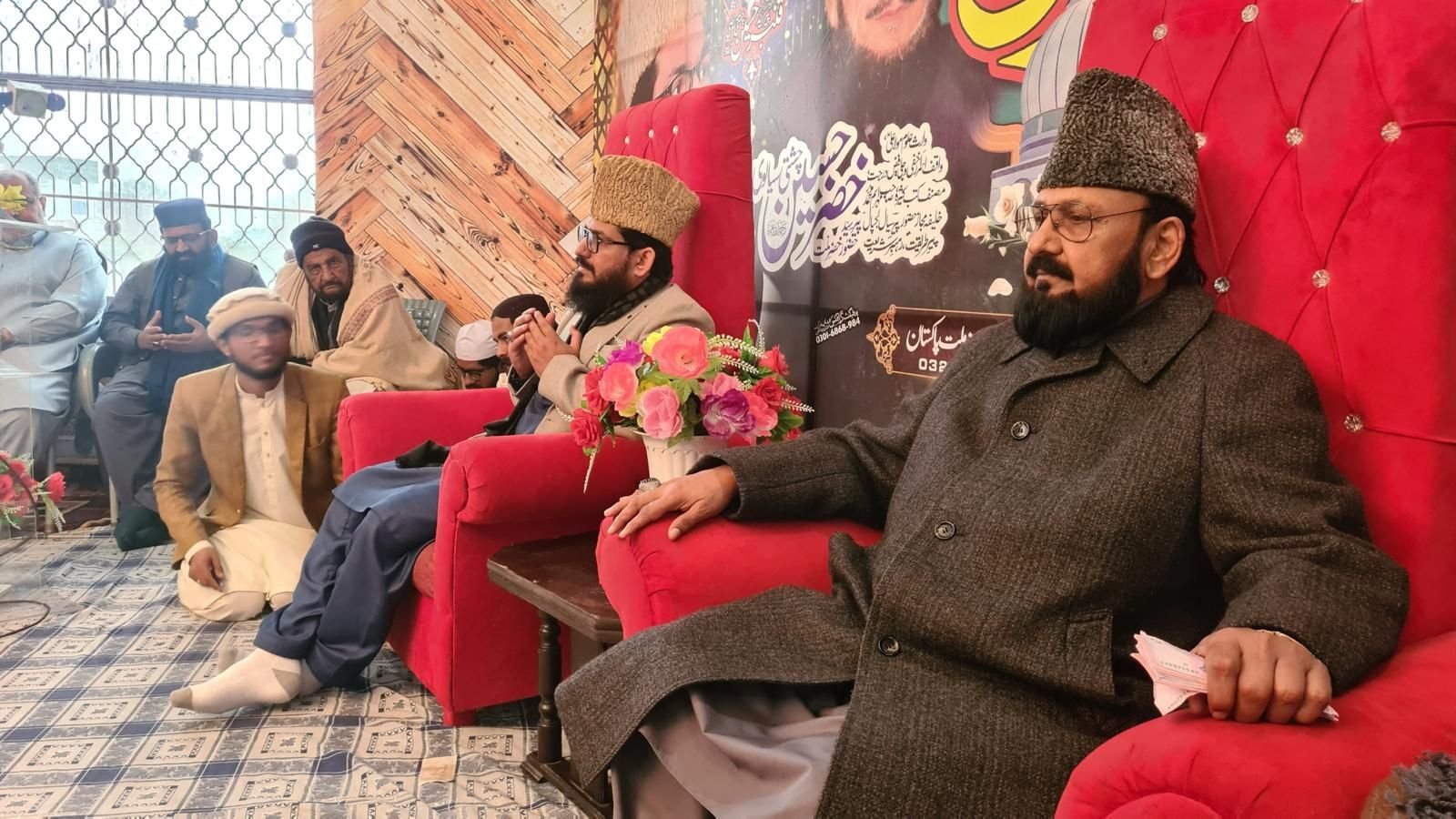
The eight kinds of purity are taken from the closing pages of a work by Peer Syed Khizar Hussain Chishti (Khizr-e-Millat), after whom BKM Community Group — Bazm-e-Khizr-e-Millat — is named:
- Fazail-e-Ghusl (فضائلِ غسل) — its final section, پاکیزگی کی قسمیں, quotes Shaykh Isma’il Haqqi’s Tafsir Ruh al-Bayan on the authority of Shaykh Nishapuri. 24 pages, Urdu. Read the PDF
The treatise is in Urdu. The eight items above are rendered into English here from that passage; the Arabic terms are given so a reader with Arabic can check them against Ruh al-Bayan directly.
About this article
This is a rendering of a passage from a classical tafsir as quoted in an Urdu treatise, not a translation of the tafsir itself. Where the English glosses a term, the Arabic is given alongside it. This is spiritual guidance, not a set of rulings.
Published by BKM Community, Manchester. If you believe something here is inaccurate, please tell us and we will correct it.
© 2026 BKM Community Group (Bazm e Khizr e Milat), Manchester. All rights reserved. Privacy Policy
Leave Your Comments