
- Classes: Wed 6-8pm & Sun 12-2pm
- Call Us: +44 7727 874307
- Email:info@bkmcommunity.com
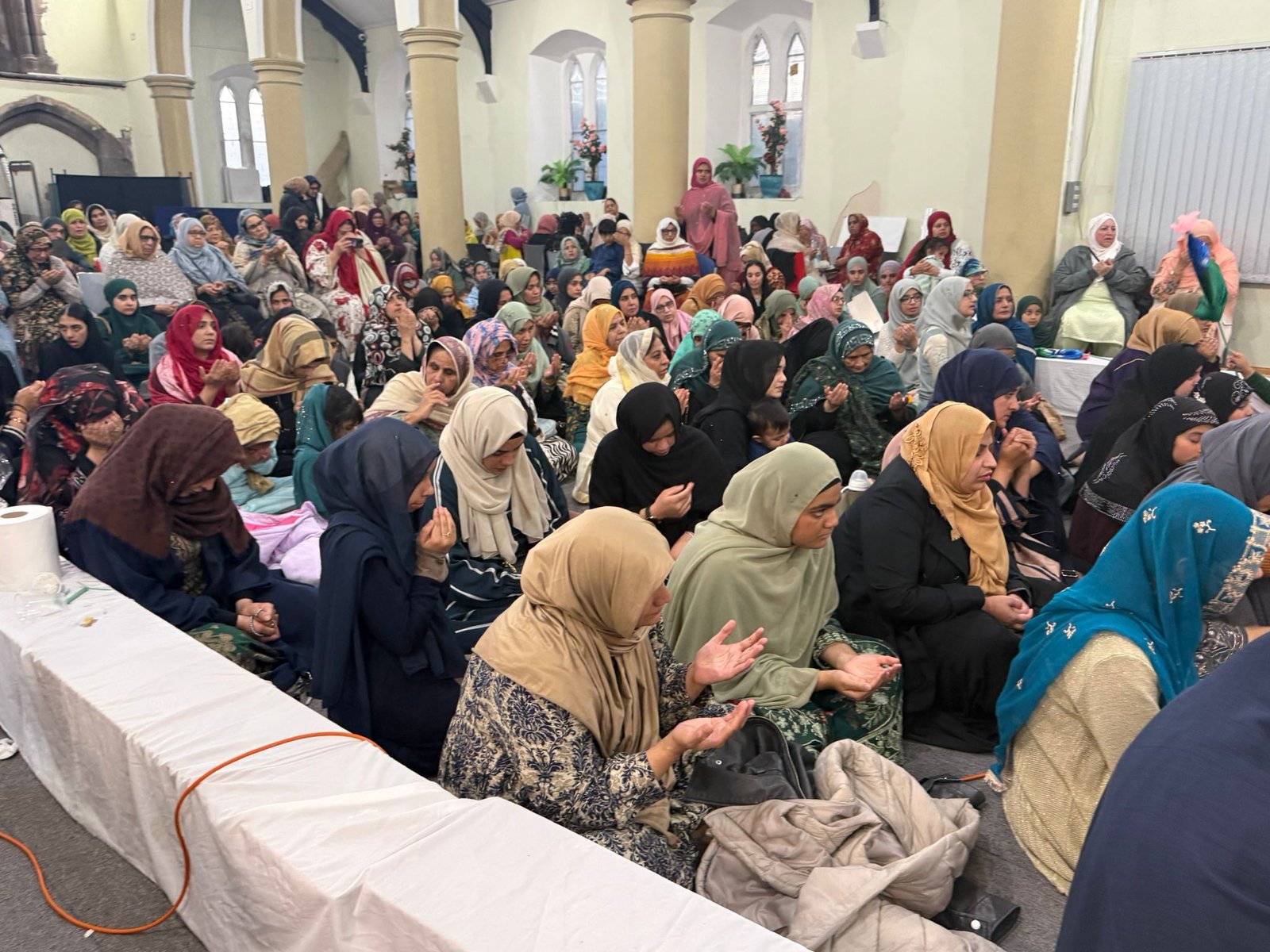
Friday occupies a distinct place in the Muslim week. It is not a sabbath in the sense of a day on which work stops entirely, but it carries an obligation that no other day does: the congregational prayer known as Jumu’ah, which replaces the ordinary midday prayer and cannot be performed alone.
That last detail is the one worth dwelling on. Of the five daily prayers, every one may be prayed individually if circumstances require. Jumu’ah may not. It exists only as a gathering.
The Command
The instruction appears in the surah named after the day itself, Surah Al-Jumu’ah:
O you who have believed, when the call to prayer is made on the day of Jumu’ah, then proceed to the remembrance of God and leave off trade. That is better for you, if you only knew. (62:9)
The verse is striking in what it interrupts. It does not ask people to pray during their leisure. It asks them to stop earning. Commerce, the most defensible of daily activities, is set aside for a fixed hour each week, and the verse anticipates the objection by answering it directly: this is better for you.
The following verse then releases people back into the world, permitting them to disperse and seek God’s bounty once the prayer ends. The pause is deliberate and bounded.
What Makes Jumu’ah Different
Three things distinguish it from an ordinary Dhuhr prayer.
It requires a congregation. The prayer is not valid performed alone. Scholars differ on the minimum number required, but all agree that a gathering is essential.
It includes a khutbah. Two short sermons precede the prayer and form part of it. The prayer itself is then shortened to two units rather than four. In effect, half the prayer has been replaced by listening.
It is obligatory on those who qualify. Attendance is required of adult male Muslims who are resident, in good health, and free of genuine impediment. Women, travellers, the ill, and those caring for them are excused, though women who wish to attend should not be prevented from doing so.
The Khutbah Is Not a Warm-Up
It is common to treat the sermon as preamble, arriving as it concludes and considering oneself on time. This misunderstands its function.
The khutbah is why the prayer is shortened. It occupies the place of the two rak ahs that would otherwise be prayed. Listening attentively is part of the worship, which is also why side conversation during the sermon is discouraged so firmly in the tradition.
Practically, this makes the khutbah the only moment in the week when a community reliably assembles and gives its attention to one speaker. A well-used khutbah addresses what people are actually facing. A wasted one becomes fifteen minutes of general exhortation that could have been delivered in any decade.
Why the Gathering Itself Matters
Islam can be practised privately. Prayer, fasting, and remembrance require no witnesses. But a faith practised entirely in private tends to thin out, and Jumu’ah works against that.
Consider what the gathering actually does. It puts people in the same room who would not otherwise meet. The retired man and the university student stand in the same row. A newcomer to the area discovers there is a community here at all. Someone struggling quietly is seen by people who might notice and ask.
Much of what a community provides, whether help during illness, support after a bereavement, a quiet word about a job, or simply the knowledge that one is not alone, depends on people being in proximity often enough for need to become visible. A weekly obligation guarantees that proximity in a way that goodwill alone does not.
Practical Etiquette
The tradition surrounds Jumu’ah with recommended practices, most of them straightforward:
- Perform ghusl and attend clean, in your better clothing.
- Use fragrance if you have it, and avoid coming with strong food odours, out of consideration for those beside you.
- Arrive early. The earlier one comes, the greater the reward described in the narrations. Early arrival also allows time to pray voluntary units and settle before the khutbah begins.
- Do not step over people to reach a space further forward once the rows have formed.
- Listen in silence. Once the imam begins, conversation stops, including advising someone else to be quiet.
- Send blessings on the Prophet (peace be upon him), a practice particularly encouraged on this day.
If You Have Fallen Out of the Habit
Many people drift from regular attendance. Work makes it difficult, a move disrupts the routine, or a period of distance from religious practice sets in, and returning starts to feel awkward, as though one has to explain oneself.
No explanation is required. Mosques are not built for people with unbroken records of attendance. Nobody at the door is keeping count, and the person beside you is far less interested in your absence than you imagine.
If practical obstacles are the issue, they are often more negotiable than they appear. Many employers will accommodate a shifted lunch break when asked directly, particularly where the request is specific and predictable.
Join Us for Jumu’ah
BKM Community Group gathers in Manchester and visitors are genuinely welcome, whether you attend every week or are coming for the first time. If you are new to the area or unsure of our times, call 07727 874307 or get in touch. You can also see our community services.
Further reading in our tradition
This article follows the Hanafi school as it is taught in the Ahl-e-Sunnat tradition. The standard reference works are:
- Bahar-e-Shariat — Mufti Amjad Ali Azmi. The complete Hanafi fiqh manual in Urdu, and the first place to look for a ruling on worship.
- Fatawa Ridawiyya — Imam Ahmad Raza Khan (Ala Hazrat). Rulings on specific questions. Read on Archive.org
- Tafsir Noor-ul-Irfan — Mufti Ahmad Yar Khan Naeemi. Commentary on the Quran alongside Kanz-ul-Iman. English edition on Archive.org
These are named as the authoritative works of the tradition this article follows. Page references have not been checked against them here. Where anything in this article differs from these works, they are correct and this article is not.
© 2026 BKM Community Group (Bazm e Khizr e Milat), Manchester. All rights reserved. Privacy Policy
Leave Your Comments